Gye Nyame is on buses, walls and tattoos. What Adinkra symbols actually say
The most common symbol painted on the back of Ghanaian tro-tros is not a football crest or a flag. It is Gye Nyame, a swirling Adinkra sign that means “except God”.
Adinkra symbols are the visual language of the Akan people of Ghana and Côte d’Ivoire. Each one stands for a proverb, a value or a piece of history. They are printed on cloth, carved into stools and gold weights, cast into jewellery, used in company logos and university crests, and more and more often tattooed onto skin.
Cloth for the dead
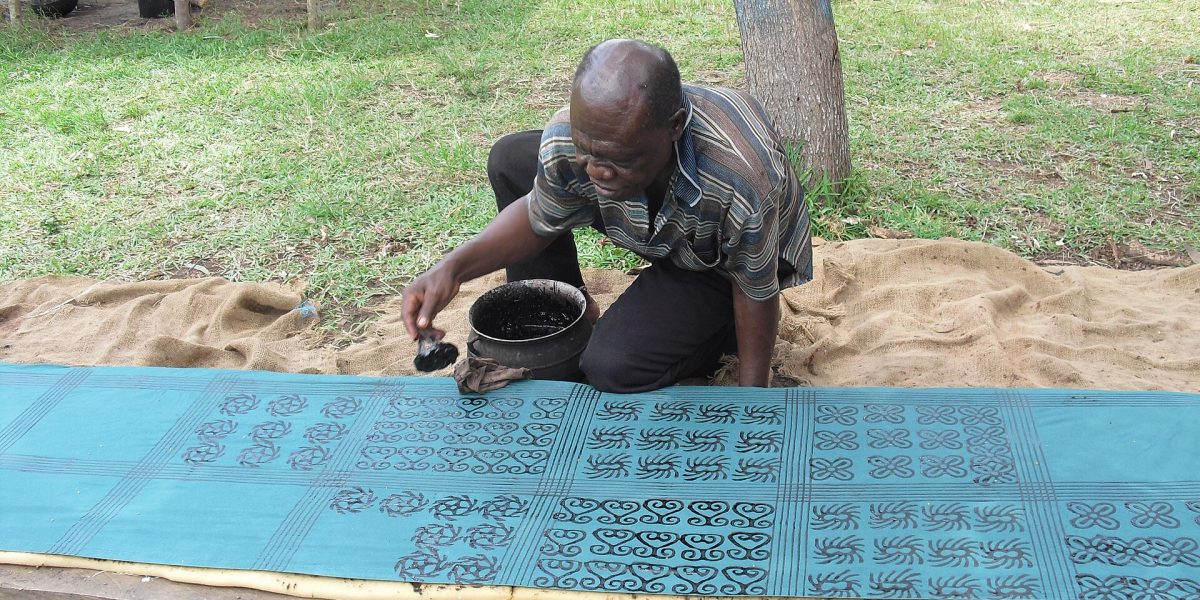
Adinkra began as funeral cloth. Mourners wore dark cloth stamped with symbols to say goodbye to the dead, and the word Adinkra is often linked to the idea of farewell. The symbols were printed by hand using stamps carved from calabash, dipped in a thick black dye made from the bark of the badie tree, boiled down with iron slag.
The town most associated with this craft is Ntonso, near Kumasi in the Ashanti Region. Visitors to Ntonso can still watch the dye being prepared and the stamps being pressed onto cloth in rows, and many buy a small piece they have stamped themselves.
The symbols most people know
Gye Nyame, “except God”, expresses the supremacy of God. It is the best-known Adinkra symbol by a long way, and it appears on churches, shops, cars and clothing all over Ghana.
Sankofa, “go back and get it”, teaches that there is nothing wrong with returning to the past to recover what was lost. It is drawn either as a bird with its head turned backwards holding an egg, or as a heart-like shape. Sankofa became a key symbol for African Americans exploring their roots and gave its name to Haile Gerima’s 1993 film about slavery.
Dwennimmen, the ram’s horns, stands for humility together with strength. It is associated with learning, and variations of it appear in education logos.
Nyame Dua, “God’s tree”, refers to the altar placed in front of Akan homes for offerings and stands for God’s presence and protection.
Funtunfunefu Denkyemfunefu, the Siamese crocodiles, shows two crocodiles sharing one stomach. The proverb behind it warns against fighting over things that benefit everyone. Ghanaian politicians of every party have been reminded of it at some point.
Akoma, the heart, stands for patience and tolerance. Mate Masie, “what I hear, I keep”, stands for wisdom and knowledge.
Where you see them without noticing
Once you learn a dozen symbols, Ghana starts to read differently. Adinkra signs appear on the walls of government buildings, on university crests, and in the branding of banks and telecoms companies. Designers use them to signal Ghanaian identity without words, and they are among the first things diaspora visitors choose for tattoos after a trip.
The warning from Ntonso
Adinkra printers in Ntonso often tell visitors that the symbols have meanings that should be respected, and that some are better suited to certain occasions than others. The funeral origin has not gone away. Fully stamped dark Adinkra cloth is still worn to funerals in Asante.
The bus driver with Gye Nyame on his back window is making a statement of faith. The tourist who gets the same symbol tattooed on a wrist in Osu is making one too, whether or not they know it.