Constitution Reigns Supreme: Dr Srem-Sai Weighs in on OSP Act Ruling

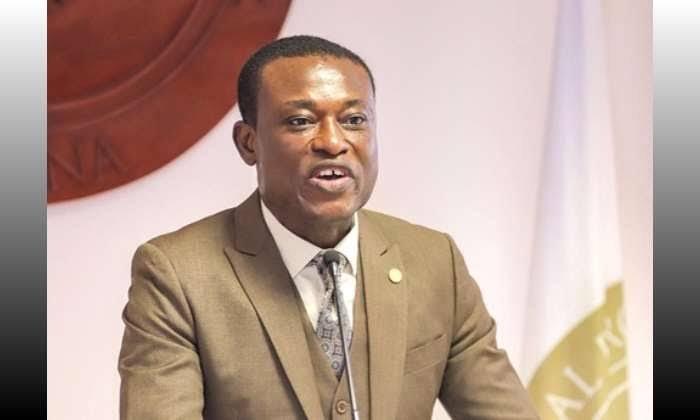
Deputy Attorney-General Dr Justice Srem-Sai has defended the High Court's recent ruling on the powers of the Office of the Special Prosecutor (OSP), insisting that the OSP Act cannot override the Constitution. Speaking on a TV program, Dr Srem-Sai argued that the OSP Act is an ordinary Act of Parliament and cannot alter the constitutional powers vested exclusively in the Attorney-General.
Constitutional Supremacy Reigns
Dr Srem-Sai emphasized that the Constitution provides a clear procedure for amending its provisions, and no ordinary legislation can be used to circumvent that process. He noted that the various constitutional review commissions and committees established over the years were founded on the understanding that constitutional provisions could only be altered through the amendment process set out in the Constitution. "This whole idea of Constitution Review Commission, Constitution Review Committee and Constitution Review Implementation Committee, what we have been doing from 2010, is because we all agree and understand that the only way we could amend the Constitution is to go by the process of amendment specified by the Constitution," he said.
Previous Supreme Court Decisions Weigh In
The Deputy Attorney-General pointed to previous Supreme Court decisions, saying the apex court had consistently ruled that Parliament could not amend constitutional provisions through ordinary legislation. "There have been several cases where Parliament sought to make changes to things that were in the Constitution, and the Supreme Court has been emphatic that you cannot do so without using the special procedures for amendment," he said. Dr Srem-Sai maintained that because the Constitution remains the supreme law of Ghana, any legislation that appears inconsistent with its provisions cannot be interpreted as having amended the Constitution unless Parliament follows the prescribed constitutional amendment process.
High Court Ruling Sparks Discussion
The High Court's ruling generated widespread discussion among legal practitioners and governance experts over the constitutional limits of the Office of the Special Prosecutor's prosecutorial mandate and its relationship with the Attorney-General's Office. The discussion centered on the OSP Act's potential to override the Constitution, with some arguing that the Act had indeed altered the constitutional powers vested in the Attorney-General.
Supreme Court Set to Deliver Verdict
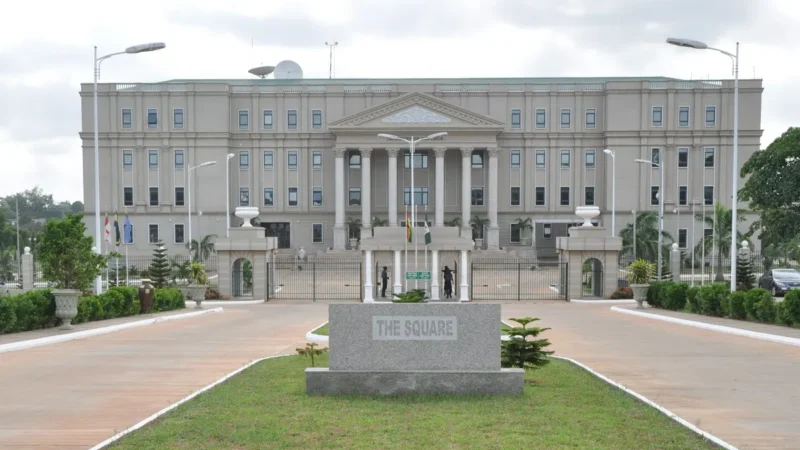
The Supreme Court will deliver judgment in a suit challenging the prosecutorial powers of the Office of the Special Prosecutor on July 29, 2026. A seven-member panel, chaired by Chief Justice Paul Baffoe-Bonnie, fixed the date after parties concluded arguments in the case brought by private legal practitioner, Noah Adamtey. Mr Adamtey is challenging the constitutionality of the Office of the Special Prosecutor Act, 2017 (Act 959), arguing that it unlawfully grants the OSP independent prosecutorial authority.
Constitutional Implications Loom Large
The Supreme Court's verdict on the OSP's powers will have significant implications for Ghana's governance structure. If the court upholds the High Court's ruling, it could limit the OSP's ability to investigate and prosecute high-profile cases, potentially undermining the fight against corruption. However, if the court reverses the ruling, it could embolden the OSP to pursue its mandate with greater autonomy, potentially leading to more effective anti-corruption efforts. The outcome will be closely watched by legal practitioners, governance experts, and the general public, who are eager to see how the Supreme Court will navigate this complex constitutional issue.
Source: Joy Online