
Groundbreaking Ghana: Meet UMA-Subika’s Team That’s Redefining Local Mining
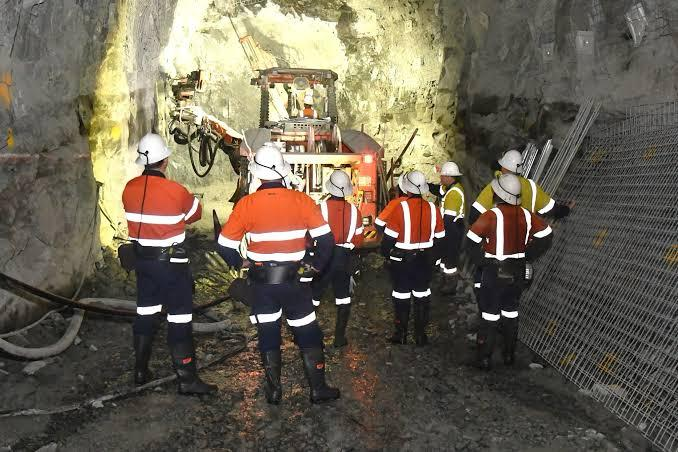
In a groundbreaking move, the Underground Mining Alliance (UMA) has redefined local mining in Ghana, employing over 320 direct workers from its 10 primary host communities at the Newmont's Ahafo South Mine. This shift marks a significant departure from the traditional narrative of heavy industrial mining in developing economies, where local communities were often left on the margins of technical employment.
Redefining Local Mining: UMA's Structural Employment Model
For the past eight years, UMA has prioritized local labor across every operational tier, moving beyond superficial corporate social responsibility (CSR) gestures. The company's structural employment model represents a pivotal benchmark in the transition toward localised industrial capacity in West Africa. Currently, local employees make up 52 percent of UMA's total workforce, a significant milestone in the company's commitment to localised industrial capacity.
Closing the Skills Gap: UMA's Technical Partnerships
Historically, the friction between host community expectations and specialised skill requirements has been a flashpoint across mining jurisdictions worldwide. UMA's operational model directly addresses this gap through continuous skill development and strategic technical partnerships. The company has partnered with OEM giant Sandvik to provide hands-on, high-grade mechanical training on heavy underground machinery, training eight mechanical technicians in its inaugural cohort and continuing to absorb eight local and national technicians annually through a competitive selection pipeline.
Localisation and Sustainability: A Global Movement
Industry leaders argue that local workforce integration is no longer optional for long-term operational viability. According to data from the Intergovernmental Forum on Mining, Minerals, Metals and Sustainable Development (IGF), over 80 percent of mineral-rich developing nations now maintain explicit local employment mandates or target percentages. The integration of host-community labor into underground mining operations provides a concrete framework for advancing the United Nations Sustainable Development Goals (UN SDGs) 8 on Decent Work and Economic Growth, 4 on Quality Education and Skills, 9 on Industry, Innovation, and Infrastructure, and SDG 10 on Reduced Inequalities.
UMA's Operational Excellence: Guiding Principles
At the Subika operations, management operates under a core set of corporate values designed to reinforce community integration and operational excellence. The company's purpose is to create enduring value and certainty for its people, clients, investors, and the communities in which it operates. This purpose is guided by five core principles: No shortcuts, Never wasteful, Walk in their shoes, Smarter Together, and Enable tomorrow.
The model built by UMA at Ahafo South provides a clear operational template for sustainable mining: it is achieved not merely by extracted yield, but by the technical capabilities left behind in the hands of host community workers. As global resource extraction faces heightened scrutiny regarding local value retention, UMA's performance in Ghana reflects a broader global movement toward strict local content implementation in natural resource management. The question now is: will this pioneering model be replicated in other mining jurisdictions, and what will be the long-term implications for local communities and the mining industry as a whole?
Source: Joy Online