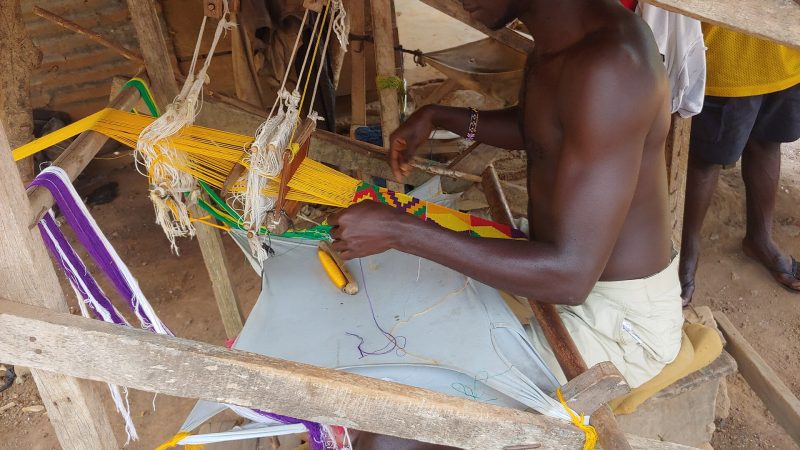
A British governor asked to sit on the Golden Stool. Yaa Asantewaa answered with a war
In March 1900, the British governor of the Gold Coast, Sir Frederick Hodgson, stood before Asante chiefs in Kumasi and asked why he had not been given the Golden Stool to sit on.
Few questions in colonial Africa did more damage. The Golden Stool, the Sika Dwa Kofi, is the sacred symbol of the Asante nation. According to tradition it was brought down from the sky by the priest Okomfo Anokye for Osei Tutu, the first Asantehene, and it holds the soul of the people. No one sits on it, not even the king.
A kingdom without its king
By 1900 the Asante were already under heavy British pressure. In 1896, the Asantehene, Prempeh I, had been arrested and sent into exile, later to the Seychelles, along with members of the royal family. Among the exiles was the grandson of Yaa Asantewaa, the queen mother of Ejisu, a town near Kumasi.
Hodgson’s demand for the stool came on top of that humiliation. The chiefs met in secret to decide what to do. When some of the men hesitated, Yaa Asantewaa spoke. The words attributed to her have been repeated in Ghanaian schools for generations: if the men of Asante would not fight, the women would, and she would call on her fellow women to do it.
The War of the Golden Stool
The fighting began in 1900 and lasted about six months. Asante forces besieged the British fort in Kumasi, where Hodgson and his party were trapped for weeks before breaking out. Britain sent reinforcements from across West Africa, and the uprising was put down later in the year.
The British captured Yaa Asantewaa and about 15 of her advisers and sent them into exile in the Seychelles. She died there on 17 October 1921. Asante was formally annexed to the Gold Coast colony in 1902.
The stool that was never found
The British won the war and never got the Golden Stool. It had been hidden, and it remained hidden. Years later, in 1921, workers building a road came across it and some of its gold ornaments were stripped. The people involved were tried by Asante authorities, and the British eventually recognised that the stool was beyond their claim. Prempeh I returned from exile in 1924 and was restored as Kumasehene in 1926.
The stool is still kept by the Asantehene today. It appears in public only on great occasions, resting on its own chair, never sat upon.
How Ghana remembers her
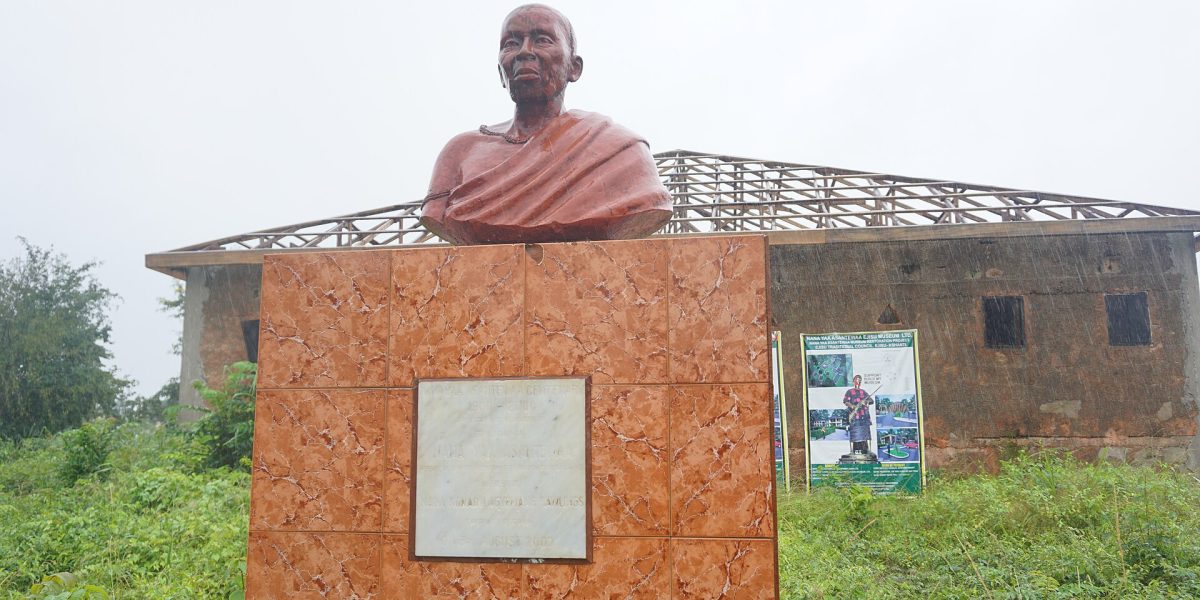
Yaa Asantewaa is one of Ghana’s most honoured historical figures. The Yaa Asantewaa Girls’ Senior High School in Kumasi carries her name, a museum in Ejisu was dedicated to her memory, and her story has been told in plays, books and films. In 2000, the centenary of the war was marked with a festival in Ejisu.
Hodgson asked where the stool was so he could sit on it. More than 125 years later, it is still in Kumasi, and still empty.