Two hunters, a spider and a king: the Bonwire legend behind kente cloth
According to Asante legend, kente began one night in the forest near Bonwire, when two men checking their traps stopped to watch a spider build its web.
The men are named in the story as Ota Karaban and his friend Kwaku Ameyaw. The spider was Ananse, the trickster of Akan folklore. Ananse agreed to teach them its patterns in return for a few favours, the men went home to Bonwire and tried weaving the designs with thread, and the result was the cloth that became kente.
From the forest to the palace
In the legend, news of the new cloth reached Osei Tutu, the first Asantehene. He adopted it as a royal fabric, reserved for the king and for special occasions, and Bonwire became the weaving town of the Asante court. Bonwire, about 20 kilometres from Kumasi, still holds that identity. Its weavers claim a direct line back to the first looms, and the town hosts a kente festival.
Historians note that narrow-strip weaving existed in West Africa before the Asante kingdom, and that the Ewe of the Volta Region have their own long kente tradition with different patterns and colours. The Bonwire story is the Asante account of how the cloth came to them, and it is the version most Ghanaians learn first.
How kente is made
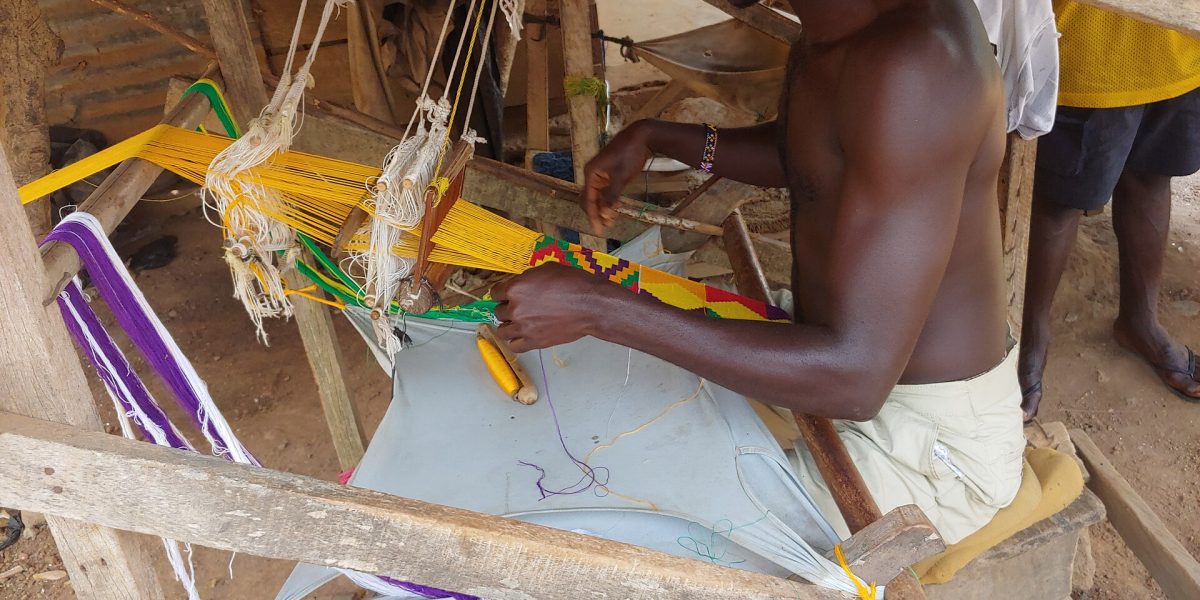
Kente is woven on narrow looms into strips about four inches wide. The strips are then sewn together edge to edge to make a full cloth. A man’s cloth, worn wrapped around the body and over the left shoulder, can take many strips and weeks of work. Traditional weaving is done by men, though that is changing, and apprentices learn by sitting beside a master weaver for years.
Every pattern has a name
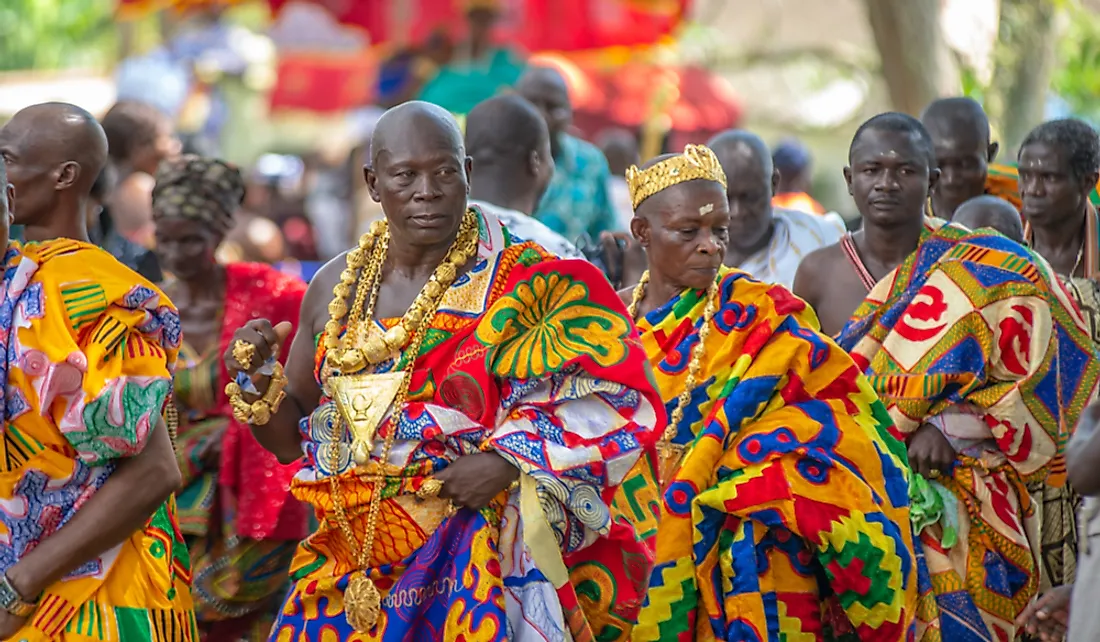
Kente patterns are not decoration alone. Each has a name and a meaning, and some were once reserved for the Asantehene. Colours carry meaning too. Gold is linked to royalty and wealth, green to growth and harvest, red to sacrifice and struggle, and black to maturity and spiritual energy. Choosing a kente for a wedding or funeral has traditionally meant choosing what the cloth says about the wearer.
The global cloth
Kente travelled far beyond Asante. Kwame Nkrumah wore it at key moments of the independence era, and it became a symbol of pan-African pride. African American graduates wear kente stoles at commencement ceremonies. In 2020, members of the US Congress wore kente scarves while kneeling in memory of George Floyd, a moment that drew criticism from some Ghanaians and African Americans who felt the cloth was being used as a prop.
Printed “kente” fabric made in factories, often outside Ghana, is now sold worldwide at a fraction of the price of handwoven cloth. Weavers in Bonwire say the difference is easy to find: look for the seams. Handwoven kente is built from strips sewn edge to edge, and a printed copy has none.