Nobody wins the Jollof war, and that is why it never ends
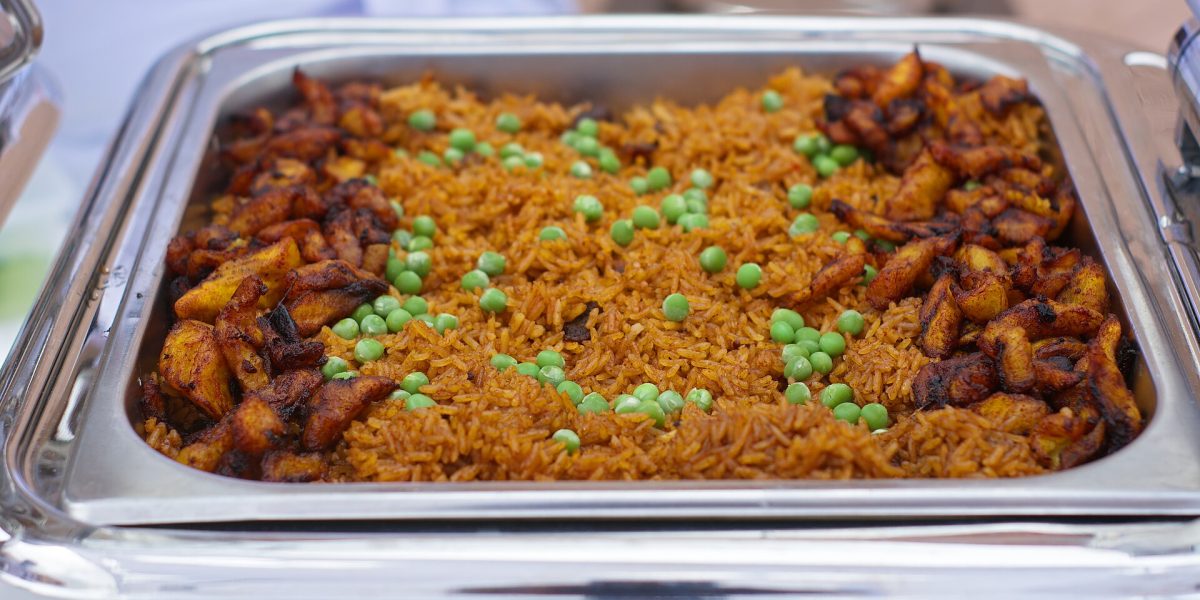
The dish at the centre of the most famous food fight in Africa probably comes from a country that is not even in the argument.
Jollof rice is generally traced to the Wolof people of Senegal and the Gambia, and to thieboudienne, rice cooked with fish and vegetables in a tomato base. The name comes from Jolof, the old Wolof state. From there, one-pot tomato rice spread along the West African coast and became a party staple from Freetown to Lagos. Ghana and Nigeria have spent the last two decades arguing about whose version is best.
What makes Ghanaian jollof Ghanaian
Ghanaian jollof is usually made with long-grain perfumed rice, often jasmine or basmati. The base starts with onions, tomatoes and pepper, and cooks often add ginger, garlic and a spice blend. Meat, chicken or fish is cooked separately, and the stock from it goes into the rice. Ghanaians defend the aroma as the point of the dish.
It is commonly served with shito, the black pepper sauce made with dried fish and shrimp, fried chicken, and salad, and at many Ghanaian parties a big pan of jollof is the first thing to run out.
What makes Nigerian jollof Nigerian
Nigerian jollof is traditionally made with parboiled long-grain rice, which holds its shape and absorbs the stew base without going soft. The base leans heavily on tomato and red bell pepper blended with scotch bonnet, and curry powder, thyme and bay leaves are standard. Nigerians talk about “party jollof”, cooked over firewood in huge pots at weddings and owambe parties, with a slightly burnt, smoky layer at the bottom that fans say cannot be copied at home.
It usually comes with fried plantain (dodo), fried chicken or beef, and moin moin.
How the fight went online
The Jollof war started as friendly teasing between neighbours and exploded on social media in the 2010s. Celebrities joined in, restaurants in London and New York picked sides, and cook-offs were staged in several countries. A running joke holds that Senegal, the original home of the dish, stays out of it while Ghana and Nigeria fight over a borrowed recipe.
The argument also produced songs, memes and brand campaigns. Every few months a fresh video of someone “rating” jollof from one country restarts it. 22 August is marked online as World Jollof Rice Day, which has turned into an annual excuse to reopen the debate.
What the war is really about
Ghana and Nigeria compete over a lot more than food: music, football, film, business and who gets to speak for West Africa abroad. They are also deeply connected. Millions of people move between the two countries, marry across the border, and share musicians, churches and markets. The Jollof war lets them compete without anything real at stake. That is why nobody wants it to end.
Ask a Ghanaian and a Nigerian to settle it with a blind taste test and watch what happens: both will find a reason the test was unfair before the plates are cleared.