A teacher designed Ghana’s flag in 1957. Theodosia Okoh also ran Ghanaian hockey for decades
The flag that went up over Ghana on 6 March 1957 was designed by a schoolteacher.
Her name was Theodosia Salome Okoh. She was a teacher and artist, and her design, three horizontal bands of red, gold and green with a five-pointed black star in the centre, has flown over the country ever since, apart from a period in the 1960s when the middle band was changed. She died in Tema on 19 April 2015, aged 92.
What the colours mean
Okoh explained the design in simple terms that Ghanaian schoolchildren still learn. The red stands for the blood of those who died in the struggle for independence. The gold represents the country’s mineral wealth, the reason the colony was called the Gold Coast. The green stands for the forests and farmland. The black star in the middle is the lodestar of African freedom.
The black star
The star connects Ghana’s flag to Marcus Garvey’s Black Star Line, the shipping company Garvey founded in 1919 as part of his movement for African self-reliance. Nkrumah admired Garvey, and the black star became the central symbol of the new state. It appears in the name of the national football team, the Black Stars, and on Black Star Square in Accra.
Pan-African colours
Ghana was the first sub-Saharan African country to win independence from colonial rule, and its flag helped set a visual language. Red, gold and green, colours already associated with Ethiopia, became known as the Pan-African colours, and many newly independent states adopted them in the years that followed, including Guinea, Mali, Senegal and Cameroon.
The 1964 change
In 1964, when Ghana became a one-party state under Nkrumah, the middle band of the flag was changed from gold to white, matching the colours of Nkrumah’s Convention People’s Party. After Nkrumah was overthrown in 1966, the original design with the gold band was restored, and it has remained unchanged since.
Beyond the flag
Okoh’s public life did not end with the design. She was a leading figure in Ghanaian sport, serving as chairman of the Ghana Hockey Association and president of the Ghana Hockey Federation, and she played a major role in developing the game in the country. The national hockey stadium in Accra was later named after her.
For years, many Ghanaians did not know who had designed the flag. Recognition grew in her later life and after her death, with tributes during Ghana Month each March and on International Women’s Day.
A design that lasted
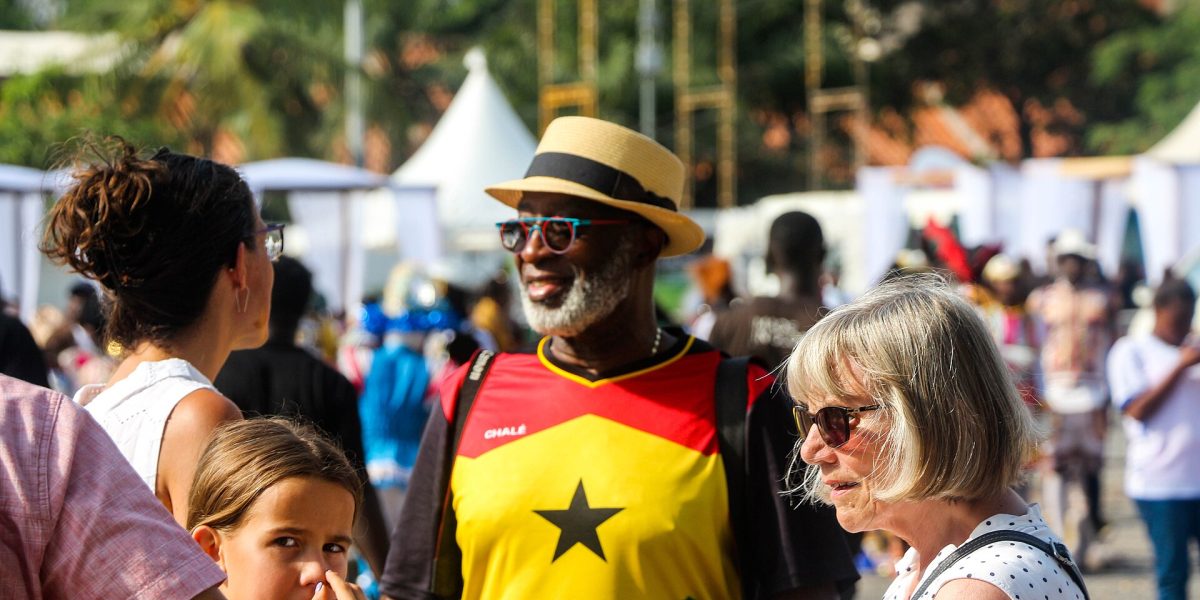
Many national flags have been redesigned since independence. Ghana’s, apart from the brief white-band period, has not. It is flown at every Independence Day parade, draped over the coffins of state funerals and painted on the faces of football fans.
The woman who drew it lived to see it flown for 58 years. Most people who wave it have never heard her name.