The Woman King made the women warriors of Dahomey famous in Hollywood. The real history is more complicated
In 2022, Viola Davis led an army of African women warriors across cinema screens around the world. The women were real. They were the Agojie of the Kingdom of Dahomey.
The Woman King, directed by Gina Prince-Bythewood, was set in 1823 in Dahomey, in what is now the Republic of Benin. Davis played Nanisca, a general of the Agojie, the all-female military unit that served the king. Thuso Mbedu played Nawi, a young recruit, with Lashana Lynch and Sheila Atim as fellow warriors and John Boyega as King Ghezo.
Who the Agojie were
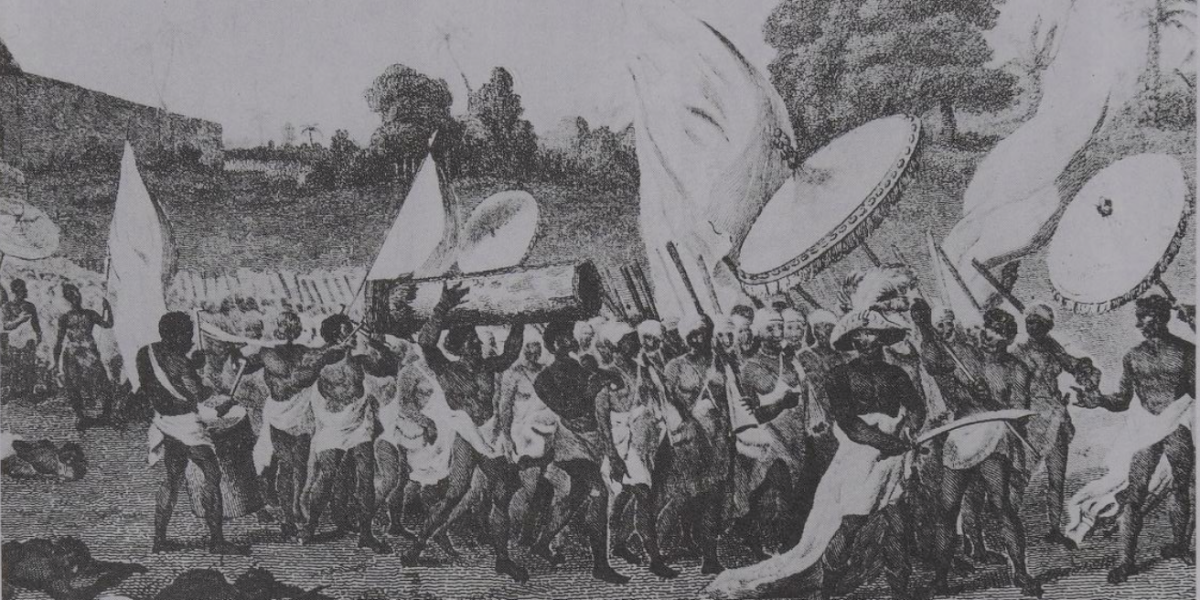
The Agojie were an all-female military force that existed in Dahomey from at least the eighteenth century until the kingdom was conquered by France in the 1890s. European visitors called them the “Dahomey Amazons”. They trained hard, fought in wars against neighbouring states and later against French forces, and were feared by their enemies.
They lived in the royal palace, were considered wives of the king in a formal sense, and were not allowed to marry or have children while serving. At their height, historians estimate there were several thousand of them.
The film
The film combined large battle scenes, training sequences and personal drama. It was praised for its action, its largely Black female cast and Davis’s commanding performance. It grossed close to 100 million dollars worldwide and was widely discussed as a breakthrough for films led by Black women in the action genre.
The criticism
The film drew serious criticism over its history. Dahomey was one of the major states involved in the Atlantic slave trade, capturing people in wars and selling them to European traders. King Ghezo, portrayed in the film as persuadable towards ending the trade, in reality continued to profit from it for years.
Critics, including many African and African American commentators, argued that the film softened this history to make its heroes more comfortable for modern audiences. Some called for a boycott. The filmmakers said they were telling a story inspired by real events and chose to focus on the women’s courage and sisterhood.
In Benin
In Benin, the Agojie are a source of national pride. A large statue of an Agojie warrior was unveiled in Cotonou in 2022, and the government has promoted the history of Dahomey as part of the country’s heritage tourism. The royal palaces of Abomey, the former capital of Dahomey, are a UNESCO World Heritage Site.
What the debate showed
The arguments around the film reflected a wider question about how African history should be told on screen: whether celebrating African strength requires leaving out African involvement in the slave trade, or whether a full picture can include both.
The Agojie fought for a kingdom that grew rich partly by selling captives. The film chose to tell one part of that truth. The history holds both.