When Nkrumah declared independence at midnight in 1957, he wore a northern smock. The story of the batakari
When Kwame Nkrumah stood before the crowd at the Old Polo Grounds at midnight on 6 March 1957 and declared Ghana free, he was not wearing a suit. He wore a northern smock.
Nkrumah and his colleagues on the platform wore the batakari, also called fugu, the handwoven tunic of northern Ghana. The choice was deliberate. By wearing the dress of the north at the birth of the nation, the leaders sent a message of unity across Ghana’s regions.
What a batakari is
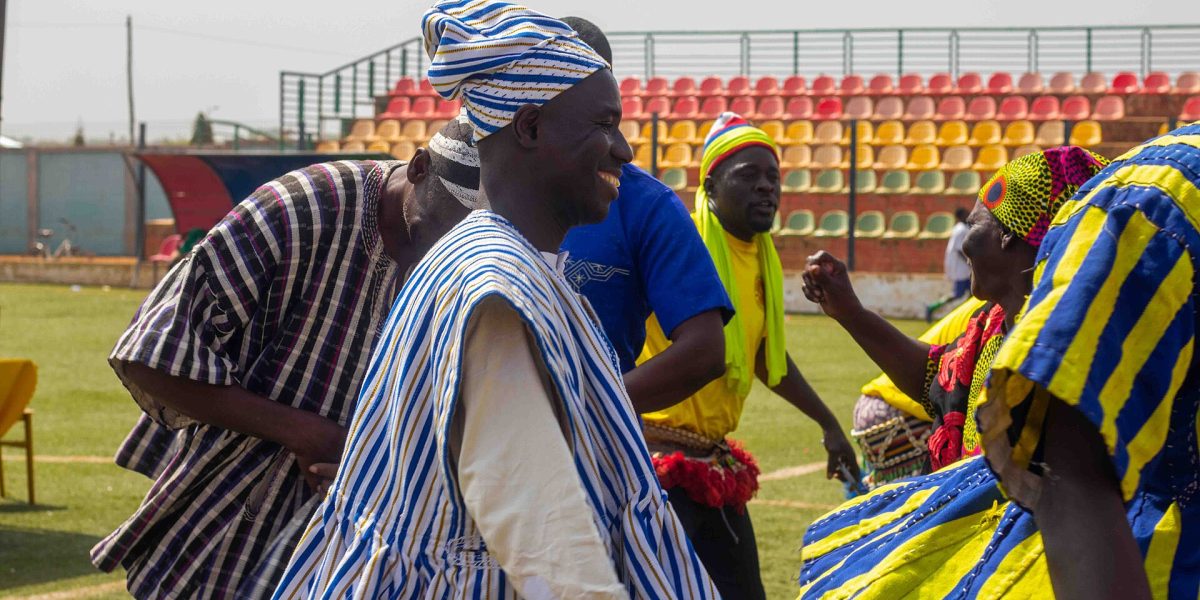
The batakari is made from narrow strips of handwoven cotton cloth, usually striped in colours such as blue, white, black, red or green. The strips are sewn together into a loose, wide tunic, often worn with matching trousers and sometimes a hat. It is associated with the Dagomba, Mamprusi, Gonja, Frafra and other peoples of northern Ghana, and it is woven in towns such as Daboya, Tamale and Bolgatanga.
Smocks range from everyday wear to elaborate ceremonial garments for chiefs, decorated with embroidery, amulets or extra fabric.
Warriors and chiefs
In northern traditions, special smocks were worn by warriors and chiefs, sometimes with charms sewn in for protection. The most elaborate smocks are still worn by chiefs and elders at festivals and ceremonies, and the style of a smock can indicate status.
National dress
After independence, the smock became part of Ghana’s national dress alongside kente. Politicians wear it to show connection with the north. President John Mahama, who comes from the north, often wears it. It appears at national events, on Independence Day and increasingly in fashion.
The fugu moment
In recent years, social media campaigns encouraging Ghanaians to wear the smock, including on Fridays, have turned it into a trend as well as a tradition. Young Ghanaians post pictures in smocks, and fashion designers have responded with modern cuts and colours for weddings, offices and nights out.
Weaving economy
The smock supports weavers and tailors in northern Ghana, where handloom weaving is an important source of income. Supporters of the craft have called for more government procurement of locally made smocks and for protection against cheap imitations.
Why it matters
The smock tells a story about Ghana as a nation made of many peoples. It is northern in origin but has become a symbol for everyone, worn by presidents, students and footballers alike.
The cloth itself
Smock cloth is woven on narrow horizontal looms, traditionally by men, producing long strips a few inches wide that are later cut and sewn together. Some weaving towns are known for indigo-dyed yarn, which gives the classic blue-and-white stripes. Buyers can often tell where a smock was made from its pattern and colours, and the best cloth, tightly woven and evenly striped, commands a much higher price.
The leaders who declared independence in 1957 could have worn anything. They chose a garment woven in the north, and it still says “Ghana” when a Ghanaian puts it on.