The red colour of waakye comes from dried sorghum leaves. How a northern dish became Accra’s favourite breakfast
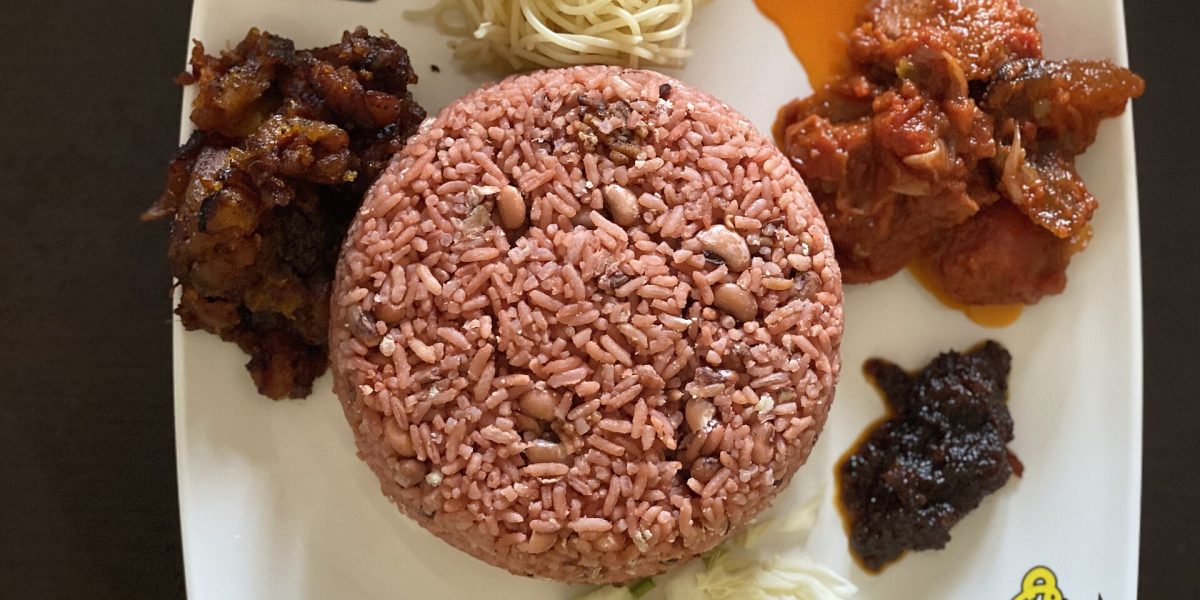
The deep red-brown colour of waakye does not come from tomatoes or spices. It comes from dried leaves of the sorghum plant, boiled with the rice and beans.
Waakye, rice and beans cooked together, is one of Ghana’s most popular dishes. It is eaten for breakfast, lunch and dinner, sold from roadside stalls in the morning, and it has fans across every region and income group.
Where it comes from
The name waakye comes from Hausa, where “wake” means beans, and the dish is linked to the Hausa-speaking and other northern communities that brought it south. In Accra, waakye became especially associated with Zongo communities, neighbourhoods where many northern Ghanaians and West African migrants settled. Today it is sold everywhere.
How it is made
Beans, often black-eyed peas, are boiled first, then rice is added and cooked together with dried sorghum leaves, known as waakye leaves. The leaves give the dish its colour and a subtle flavour. Some cooks add a little baking soda to soften the beans.
The toppings
What makes waakye special is what goes on top. A full plate can include:
- shito, the black pepper sauce made with dried fish and shrimp;
- gari, grated and roasted cassava;
- spaghetti, known in Ghanaian food vocabulary as “talia”;
- boiled or fried eggs;
- fried plantain;
- fish, chicken, beef or wele (cow skin);
- a tomato stew;
- salad, and sometimes avocado.
Customers order by listing their toppings, and a plate can be modest or loaded, depending on budget and appetite.
Wrapped in leaves
Traditionally, waakye is served on or wrapped in large leaves, which many customers say improves the taste. Styrofoam packs and plastic have become common, raising concerns about waste, and some sellers and customers have pushed for a return to leaves.
Famous sellers
Certain waakye spots in Accra are famous, with long queues from early morning. Word of mouth, and increasingly social media, decides which sellers become celebrities in their own right.
A national dish
Waakye has become part of Ghanaian identity at home and abroad. Ghanaian restaurants overseas serve it, and diaspora visitors often say it is the first thing they eat when they land in Accra.
A food that tracks prices
Because waakye is eaten by so many people every day, its price is a sensitive indicator of the cost of living. When the prices of rice, beans, oil, eggs and fish rose sharply during Ghana’s economic crisis of 2022 and 2023, sellers faced a choice between raising prices and serving smaller portions. Social media filled with complaints and jokes about shrinking plates, and “how much is waakye now” became a common way to talk about inflation.
The dish came south from the north. The queue for it now forms in almost every Accra neighbourhood before the sun is fully up.