The Fante warrior companies painted insults to their rivals on flags. Now museums collect them
On the coast of Ghana, some of the most striking works of art were made to taunt the neighbours.
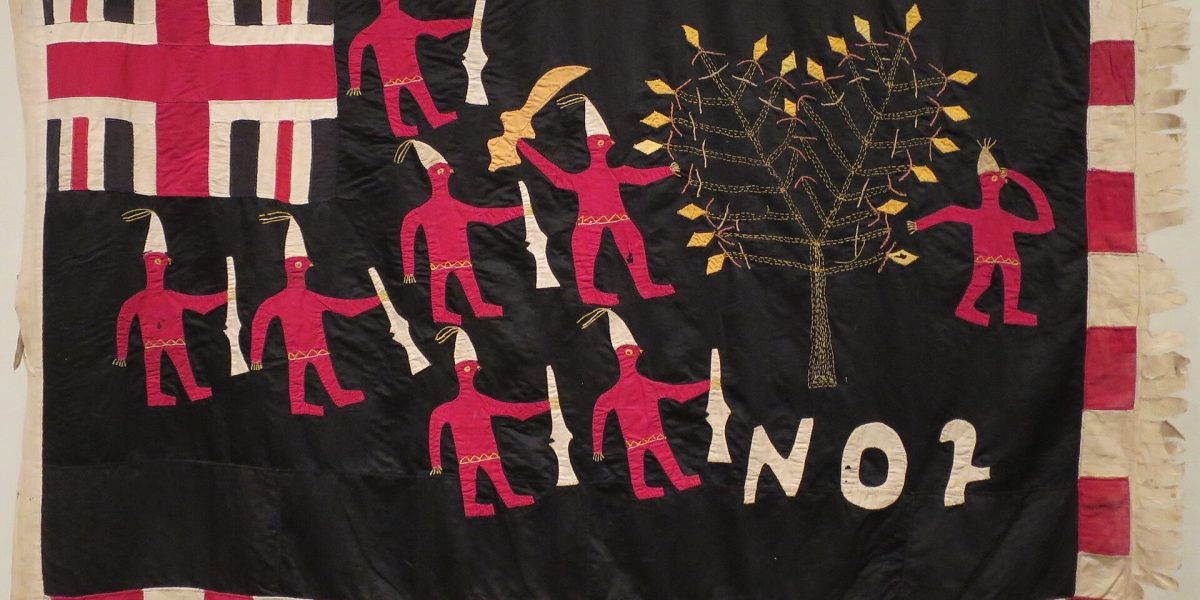
Asafo flags are the banners of the Asafo companies, the traditional warrior organisations of Fante towns in Ghana’s Central Region. Sewn from brightly coloured cloth in appliqué, they show animals, people, weapons and objects that stand for proverbs. Many of those proverbs were challenges or insults aimed at rival Asafo companies in the same town.
Who the Asafo are
The word Asafo roughly means “war people”. Historically, Asafo companies were responsible for defending their towns and taking part in war. Membership often passed through the father’s line, and each company had its own name, number, shrine, colours, songs and symbols. Towns such as Anomabo, Cape Coast, Elmina and Mankessim have several companies each, and rivalry between them is strong.
Today, Asafo companies play roles in festivals, funerals, community work and the installation of chiefs. At Winneba’s Aboakyer festival, two Asafo companies compete to catch a deer.
What the flags say
A typical flag shows a scene built on a proverb. An elephant might represent a powerful company that cannot be moved. A crab or a lion might carry a message of strength. A scene of one company’s animal overpowering another’s could be a direct challenge to a rival. The flags were paraded at festivals and ceremonies, and displaying a flag that insulted a rival company could provoke conflict.
Because of that, colonial authorities at times regulated the display of flags and tried to limit fights between companies.
The Union Jack
Many older Asafo flags have a British Union Jack in the corner. It reflects the colonial period, when the British flag was a symbol of power, and companies included it perhaps as a sign of alliance or authority. After independence in 1957, many companies replaced it with the Ghanaian flag, which makes the corner of a flag a useful clue to its date.
Craft and makers
Asafo flags were made by specialist flag makers commissioned by the companies. Designs were cut from cloth and sewn onto a background, and each flag was unique. Makers were respected artists, and some are known by name today.
From battlefield to gallery
From the late twentieth century, collectors and museums outside Ghana began collecting Asafo flags as works of African art. Exhibitions in Europe and North America displayed them, and they influenced designers and artists. In Ghana, discussion continues about keeping important flags in the country and supporting living flag makers.
Why they matter
Asafo flags combine art, history, language and politics. They record proverbs in images, reflect colonial history and show how communities expressed pride and rivalry.
The flags were meant to be read by rivals across a crowded festival ground. Museum visitors now read them from behind glass, often without knowing that they were being insulted.