Amazon Under Siege: Peru Deploys Military Against Rogue Gold Miners
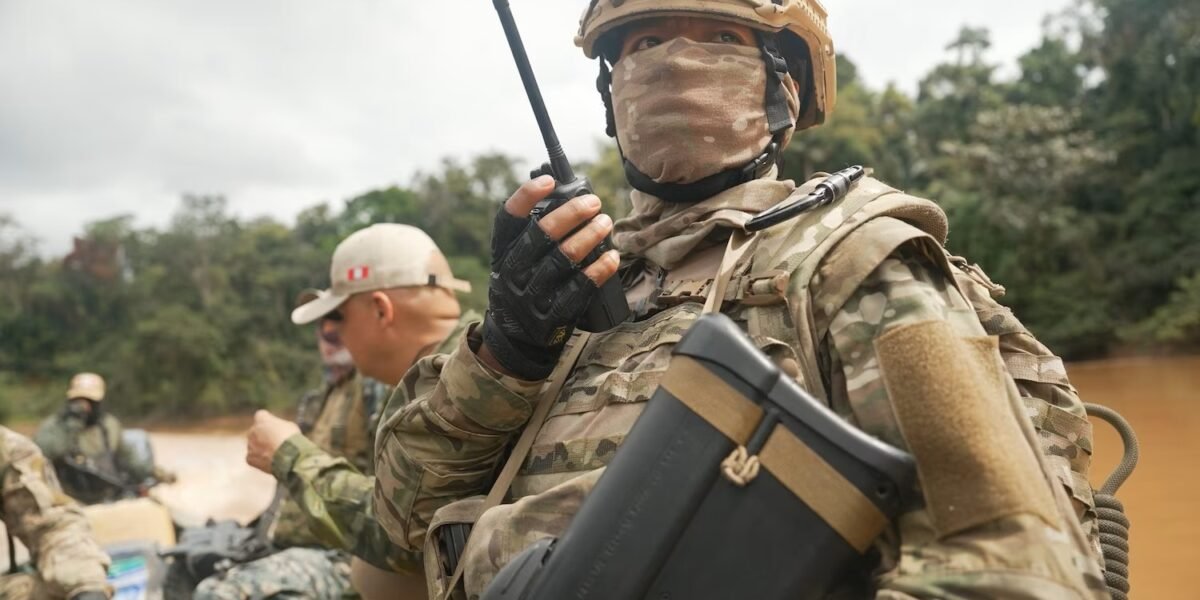
Smoke billows from the Peruvian Amazon as the country's military launches a major operation against rogue gold miners, dubbed Operation Mercury 2. The attack, which began on Tuesday, targets Tambopata National Park, a popular tourist destination in the southeastern Madre de Dios region.
Operation Mercury 2: A Desperate Effort to Save the Amazon
The skies above Tambopata National Park filled with smoke and debris as all branches of the Peruvian military stormed the area, targeting illegal gold mining camps. The operation, which comes seven years after the first campaign proved to be temporarily effective, aims to remove all illegal gold miners from within the national park and build a robust, long-term multi-agency presence to prevent their return.
The mining camps have become small villages or even towns, with fully functioning bars, makeshift restaurants, and brothels accused of sex trafficking. The alleged miners were seen fleeing the scene as the military arrived, sprinting deeper into the Amazon and leaving behind women and a child. Members of the military escorted the women and the child off the premises for questioning, all of whom were eventually released and taken back to the nearest town, Puerto Maldonado.
The Environmental Footprint of Gold Mining
Gold mining has ravaged large parts of the Amazon, spanning multiple countries including Ecuador, Brazil, Colombia, and Peru. The global rise in gold prices has made extracting even small amounts of gold increasingly lucrative, with the price of gold more than tripling globally since the first Operation Mercury in 2019. By mid-2025, gold mining had destroyed nearly 344,000 acres of the Peruvian Amazon, with 97.5% of that deforestation in Madre de Dios.
The mercury used in the gold mining process is poisoning communities, with a 2021 study finding that 71% of people living within mining communities and 80% of people living outside mining communities had hair-mercury concentrations above the U.S. EPA reference level. Researchers linked fish consumption to higher mercury levels, with several types of fish banned from consumption in the area due to their mercury levels.
A Global Effort to Save the Amazon
The operation is being partly funded by Global Conservation, an international nature conservation group whose mission is the direct protection of endangered national parks and indigenous territories in developing countries. "Illegal gold mining in national parks is crossing the Red Line for Peru's government," said Jeff Morgan, executive director of Global Conservation. "We are launching Operation Mercury 2 together to show the world Peru will no longer allow illegal mining in their national parks, polluting the rivers and water supplies for hundreds of thousands of people and wildlife; causing death and sickness for the next hundred years."
The operation is also being documented as part of "Last Lands," a series developed by ABC News and Global Conservation that documents national parks around the world in need of aid. The series aims to raise awareness about the importance of protecting these fragile ecosystems and the impact of human activities on the environment.
What's Next for the Peruvian Amazon?
The operation marks a significant escalation in the Peruvian government's efforts to combat illegal gold mining in the Amazon. While the military operation is a crucial step in protecting the national park, it is only one part of a larger effort to address the root causes of the problem. As the Peruvian government works to establish a robust, long-term multi-agency presence to prevent the return of illegal gold miners, it is clear that the fight to save the Amazon is far from over.
Source: Joy Online