Breaking Point: Local Health Initiative Seeks Partnerships to Plug Funding Gaps
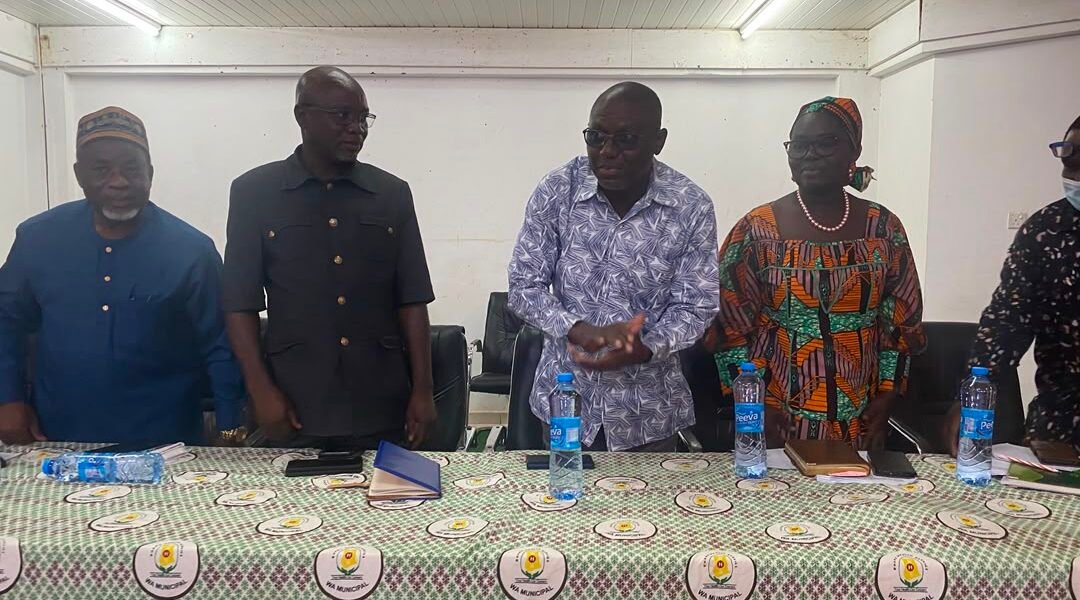
In Wa, Ghana, the Municipal Health Directorate has reached a breaking point, acknowledging that government funding alone cannot address the challenges facing health facilities in the municipality. Speaking at the 2026 Half-Year Performance Review Conference, the Municipal Disease Control Officer, Emmanuel Ormuorh, called for stronger local partnerships built on transparency and accountability to help plug funding gaps.
Call for Collaboration
The conference, held under the theme "Mobilisation of Local Resources Through Stakeholder Engagements," brought together stakeholders to discuss the challenges facing healthcare in the municipality. Mr. Ormuorh emphasized that achieving Universal Health Coverage would require more than the efforts of the Ghana Health Service. "Health service is a shared responsibility," he said. "The Ghana Health Service cannot achieve Universal Health Coverage alone. Sustainable improvements in healthcare require strong partnerships with Municipal Assemblies, traditional authorities, development partners, corporate organisations, faith-based organisations, educational institutions, community leaders, and the general public."
Addressing Funding Gaps
Despite collaborations with stakeholders on public health interventions, disease surveillance, maternal and child health services, immunisation, health promotion, and emergency preparedness, many health facilities still face major challenges. Mr. Ormuorh acknowledged that these challenges cannot be addressed through Integrated Financial Grant (IGF) funding alone. "However, we acknowledge that many health facilities still face challenges, including inadequate infrastructure, limited logistics, transportation constraints, staff accommodation issues, and increasing operational costs."
Demonstrating Openness and Accountability
To attract support from partners, health managers must demonstrate openness and accountability, according to Mr. Ormuorh. "As health managers, we must strengthen our relationships with local authorities, businesses, philanthropists, civil society organisations, and our communities. We must continuously demonstrate transparency, accountability, and measurable impact to build confidence among our partners." He encouraged every health facility and programme manager to develop innovative stakeholder engagement plans to identify potential partners.
Recognising Health Workers
Mr. Ormuorh also commended health workers for their dedication, professionalism, and resilience despite numerous challenges. He thanked the Regional Health Directorate, the Municipal Assembly, traditional leaders, NGOs, and other partners for their continued support. The occasion was also used to recognise and honour one staff member for demonstrating outstanding patient care, two staff members who had been transferred, and two retirees who had served the Ghana Health Service and the Wa Municipal Health Directorate for more than 30 years.
Path Forward
The conference has highlighted the need for stronger local partnerships to address the funding gaps facing health facilities in the Wa municipality. With a focus on mobilising local resources, health managers must now demonstrate openness and accountability to attract support from partners. As the Municipal Health Directorate continues to work towards achieving Universal Health Coverage, it remains to be seen whether these efforts will yield the desired results. One thing is certain, however: the future of healthcare in Wa, Ghana, depends on the ability of stakeholders to come together and work towards a common goal.
Source: Joy Online