Nana Osei Kofi Abiri’s education reforms reshape Kenyasi No. 1 schools
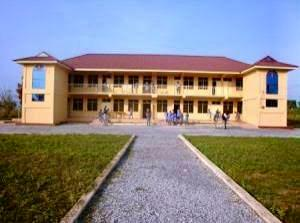
The Paramount Chief of the Kenyasi No. 1 Traditional Area in Ghana's Ahafo Region spent GH¢700,000 of his own money to replace a hazardous classroom block at the Roman Catholic Basic School. Nana Osei Kofi Abiri funded and commissioned a 3-unit, fully equipped structure to house students who previously studied in unsafe conditions. It was the first move in a broader build-out of what he calls a complete educational ecosystem for his community.
The chief then invited a 600,000 cedi corporate social responsibility investment from the Underground Mining Alliance (UMA) to restore the dilapidated Kenyasi No. 1 Anglican JHS. He established the Osei Kofi Abiri Basic School with modern classrooms and resources. He facilitated the Lady Julia ICT Training Centre to teach computer skills to students across the district.
The pattern is consistent: physical infrastructure first, then skills training, then job pathways.
Nana Abiri partnered with the University of Mines and Technology (UMaT) to bring certified technical training, short courses, and research-backed environmental education to local youth. The programs offer career paths in mining while working against illegal mining, known locally as galamsey. He also partnered with the Newmont Ahafo Development Foundation (NADeF) to establish a College of Education in Kenyasi No. 1, aimed at raising teaching standards. He championed the Ahafo Regional Police Training School to expand access to professional security education.
On the financial side, the Traditional Council now runs targeted scholarship frameworks covering tuition, uniforms, and essential learning materials for brilliant but needy students. The chief works directly with the Ghana Education Service (GES) and NADeF to address falling BECE standards and drive performance metrics across the Asutifi North District. The BECE, the Basic Education Certificate Examination, is the gateway exam for secondary school in Ghana, and its declining results in the district have been a persistent concern for education officials.
The interventions map onto United Nations Sustainable Development Goals 4 (quality education), 8 (decent work and economic growth), 9 (industry, innovation, and infrastructure), 10 (reduced inequalities), and 17 (partnerships for the goals). They bring together traditional governance, academic institutions, and multinational mining corporations in a single framework. UNESCO and World Bank studies on Sub-Saharan education indicate that decentralized, community-led interventions accelerate learning outcomes and reduce dropout rates, particularly when traditional leaders actively champion schooling. Global economic data shows that every additional year of schooling boosts individual earnings by roughly 10%, and that expanding technical and vocational education in natural-resource zones lowers youth participation in informal, high-risk extractive sectors.
Naomi Asantewaa, District Director of Education for Asutifi North, said the chief's "unwavering commitment" to replacing dangerous classroom structures relieves constant safety anxieties for teachers and students, allowing the Ghana Education Service to shift focus toward instructional supervision and academic standards. Her office no longer has to chase emergency repairs; it can concentrate on teaching quality.
Hafiz Dauda, the Asutifi North District Chief Executive, called Nana Abiri a beacon of community-led development who has relieved local government bodies of heavy financial burdens by funding vital basic education and security infrastructure out of his own pocket and through strategic alliances. The DCE's praise carries weight: district assemblies in Ghana routinely struggle to fund education infrastructure, and the chief's direct spending has freed up municipal resources for other priorities.
Most Rev. Peter Kwaku Atuahene, Catholic Bishop of the Goaso Diocese, said the chief's hands-on investment shows how traditional authorities can shape both the intellectual and moral growth of future generations, bridging gaps that central governments often struggle to cover alone. The bishop's endorsement matters in a region where the Catholic Church operates several of the schools the chief has upgraded, including the Roman Catholic Basic School where the GH¢700,000 block now stands.
Educational directors, local government heads, religious leaders, and residents have consistently praised the chief's approach as a benchmark for community-driven governance in Ghana. The model depends on the chief's personal wealth, his relationships with mining companies operating in the area, and his willingness to put his name on the projects.
The College of Education and the police training school have no public completion dates. The classroom blocks are standing, the ICT centre is running, and the scholarship framework is in place.
According to Joy Online.