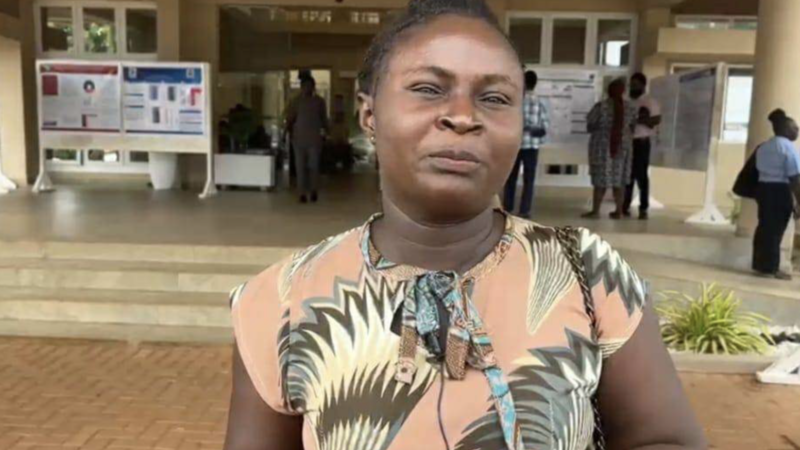
Dr Charity Binka urges media to inform, monitor and shape Affirmative Action implementation

"Passing a law is different from living it. Implementation is where many laws fail and where the media must not fail."
Dr Charity Binka, chair of the African Women Leaders Network (AWLN), delivered that warning at a capacity-building workshop for women in media organised by the Ministry of Gender, Children and Social Protection. Her subject was Ghana’s Affirmative Action (Gender Equity) Act, 2024 (Act 1121), and the three roles she says the media must play to make it work: informing the public, monitoring implementation, and influencing the narrative around women’s participation in leadership.
The passage of the law was an important milestone, Dr Binka said. Its success, she argued, would depend largely on how it was implemented. She told the journalists that the media had a responsibility to ensure the law did not remain confined to legal documents but was understood by people across the country.
Dr Binka urged journalists to simplify the law and take its provisions beyond legal and official documents to platforms where ordinary citizens could understand them.
"We have to take the Act from our legal books into our languages, our morning shows, our community radio, our community information centres," she said. "We've got to make it simple and be able for people to understand it."
She said the media also had a responsibility to monitor institutions and establish which organisations were complying with the law. "Our stories, our investigations, and follow-ups will keep institutions accountable," she said.
Dr Binka further urged media organisations to challenge stereotypes and give women greater opportunities to contribute to public discussions as experts and leaders. "You must promote women as leaders, as experts, and as capable. We have to stop the stereotyping," she said.
She cited media coverage of economic issues as an example, saying women were sometimes overlooked as commentators on subjects such as national budgets. "When they do the budgets, they don't look for women to talk about the budgets. They look for men because they think they are the economy," she said.
Dr Binka said journalists could only effectively monitor the implementation of the law if they understood its provisions, the obligations it placed on public and private institutions, and the mechanisms available for monitoring compliance. "We cannot do all this without understanding the law and becoming champions of implementation," she said. A proper understanding of the Act, she added, would give journalists the confidence to engage institutions and demand accountability.
She also stressed that affirmative action was not about replacing merit with gender. "Let us remember that affirmative action is not about replacing merit with gender," she said. "It is about addressing structural barriers that historically prevented qualified women from having equal opportunities to participate in elections."
She called for women to work across sectors, share knowledge, mentor one another, and collectively demand accountability as implementation of the law progresses. "The law has opened the door. But it is our collective action that will keep it open for generations of women in the years to come," she said.
Dr Binka said the passage of Act 1121 had created an important opportunity, but the responsibility now rested with stakeholders to ensure that women and girls across Ghana could take advantage of it. "Our responsibility now is to ensure that the door remains open. And that women and girls across Ghana are able to walk through it. Participate, lead, and contribute fully to national development," she said.
The Affirmative Action Act 2024 is expected to ensure that a critical number of women hold key positions in governance, public life, and decision-making spaces, thereby improving the lives of women in the country. The workshop itself was part of the Ministry of Gender's broader push to equip female journalists with the tools to track the Act's rollout. Dr Binka's address framed the media not as a passive observer of the law's implementation, but as an active participant in its survival.
According to Joy Online.