How Kwaku Ananse bought all the world’s stories from the sky god
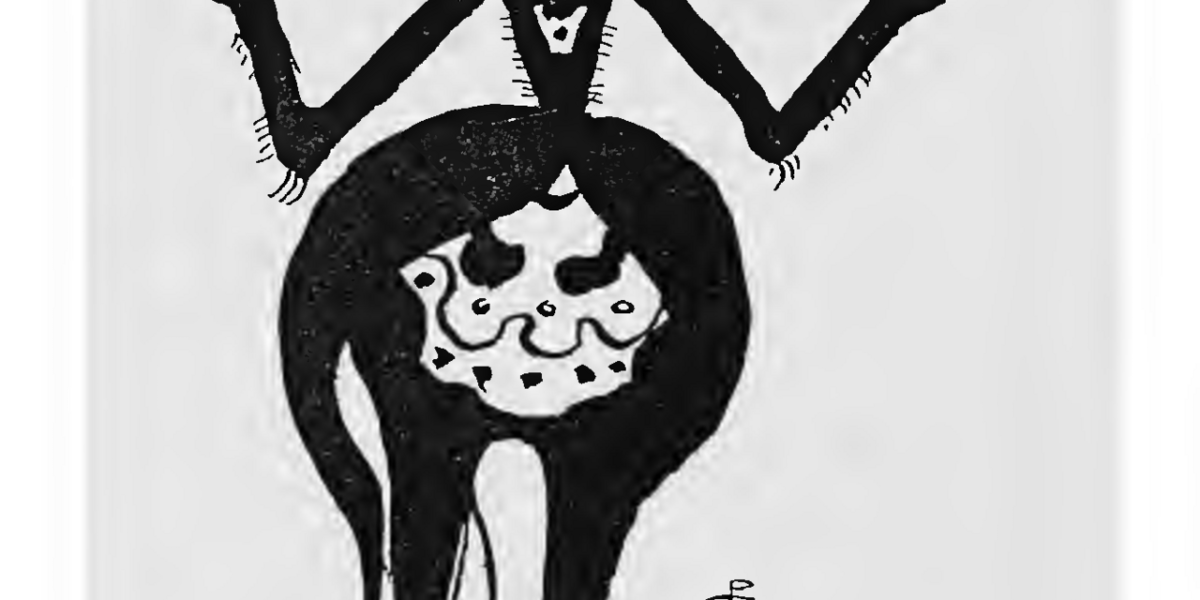
In Akan tradition, all stories belong to a spider. That is why they are called anansesem, spider stories.
Kwaku Ananse is the trickster at the heart of Akan folklore in Ghana. He is clever, greedy, lazy and funny, and he wins most of his battles by wit rather than strength. Grandmothers told his stories in the evening, after the day’s work, and children answered the storyteller with songs and interruptions.
The price of the stories
The best known tale explains why the stories are Ananse’s. Long ago, all stories belonged to Nyame, the sky god. Ananse climbed up to ask for them. Nyame named his price: Onini the python, Osebo the leopard, Mmoboro the hornets and Mmoatia, the fairy.
Ananse trapped each one. He tricked the python into stretching along a palm branch to prove its length, then tied it down. He caught the leopard in a pit. He poured water on the hornets, told them it was raining and offered shelter in a gourd. He made a sticky doll covered in gum that trapped the fairy. When he delivered them all, Nyame gave him the stories.
What the stories teach
Ananse is no role model. In many tales his greed brings disaster, such as the story of how he tried to hoard all the world’s wisdom in a pot, only to spill it when his own son showed him how to climb a tree with it. The stories teach by showing the consequences of cheating, laziness and pride.
Storytelling sessions often begin with a formula that tells listeners the tale is not meant to be believed, and end with a formula that passes the story on.
Across the Atlantic
Enslaved Akan people carried Ananse to the Caribbean and the Americas. In Jamaica, he became Anansi, and “Anansi stories” are still part of Jamaican culture. In the American South, he appears as Aunt Nancy. Anansi also found his way into modern fiction, including Neil Gaiman’s novel Anansi Boys.
Ananse today
In Ghana, Ananse appears in cartoons, children’s books and school plays. Efua Sutherland built a form of theatre, anansegoro, around the stories. Radio and television storytelling programmes have kept the tradition alive, although fewer families now gather for evening stories than in the past.
The spider still has the last laugh. Every time a Ghanaian parent tells a child a tale at bedtime, they are telling a story that, by the old rules, belongs to Ananse.